 Römisches Institut der Görres-Gesellschaft


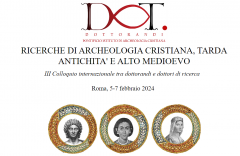
The third Doctoral Colloquium or Young Researchers' Meeting for Christian Archaeology (RACTA) will take place in Rome from 5-7 February 2024.
Inzwischen sind die Akten von RACTA II publiziert.
- Details
- Written by: Stefan Heid
- Category: Roman notes
Highlights from the cultural world of Rome
The third Doctoral Colloquium or Young Researchers' Meeting for Christian Archaeology (RACTA) will take place in Rome from 5-7 February 2024.
Inzwischen sind die Akten von RACTA II publiziert.
Prof. Dr. Christian Hannick (Würzburg) will give a lecture on 23 March at 4 pm at the Oriental Institut in Rome on the topic of “L’innografia bizantina come componente della liturgia. Problemi della ricerca filologica e musicologica”.
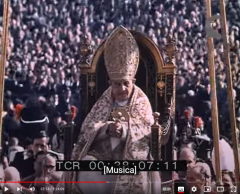
A montage of four historical film clips from the Italian film studio Luce about Rome and the opening of the Second Vatican Council shows impressive testimonies of a world event as if from another star. Important personalities of the persecuted church such as Karol Wojtyla and Stefan Wyszynski stand up in the flesh. Unfortunately, the camera pans just miss Campo Santo Teutonico several times. It is astonishing that when thousands of bishops marched in to open the Council on 11 October 1962, St Peter's Square was not even half full.
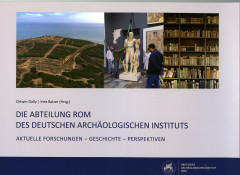
The oldest German research institution in Rome, the German Archaeological Institute, is about to move back into the Via Sardegna, where it will move into its familiar but thoroughly renovated rooms. Ortwin Dally and Ines Balzer have published a vivid booklet on "current research - history - perspectives" (2022, 2nd edition). It contains articles on the Institute's changing buildings, the archive and photo library, research projects (including Norbert Zimmermann on Christian archaeology) and the promotion of young researchers.
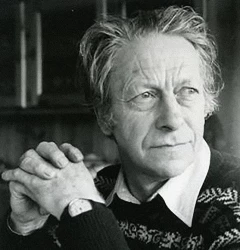
Silvio Galizia (1925-1989) from the Swiss canton of Aargau carried out the new construction of the Campo Santo Teutonico from 1962 to 1966, but beyond that he built numerous churches and priests' colleges in Rome since the 1950s. 2025 marks the 100th anniversary of his birth, and to mark the occasion, the family is dedicating itself to an appreciation and reappraisal of the estate of the great architect. From my own experience, I can say that Galizia had the impressive ability to think not only in modern terms but also in practical terms, and to conceive the interior generously even under the tightest of constraints, designing it, as it were, into the surrounding landscape..
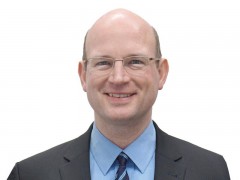
Prof. Dr. Jörg Bölling (Hildesheim) will speak on 16 March at the German Embassy to the Holy See in conjunction with the Hanns Seidel Foundation on the topic "Imperial and Episcopal Power 1000 Years Ago: Rethinking the Policies of Otoo the Great. Henry II, Ulrich of Augsburg and Godehard of Hildesheim". This is an event with invited guests. Bölling has already given several lectures at the RIGG (for ex. at the conference about the liturgical reform).
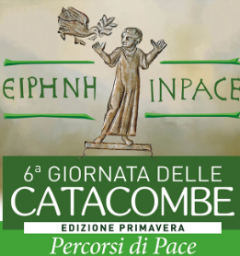
The Pontificia Commissione di Archeologia Sacra is celebrating the 6th Open Day of the Catacombs with many offers, namely in Callisto, Priscilla, Marcellino e Pietro, Pancrazio, Domitilla and Sebastiano.
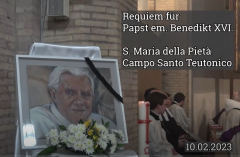
There is now a film summary of the Requiem for Pope Benedict XVI at Campo Santo Teutonico on 10 February 2023.
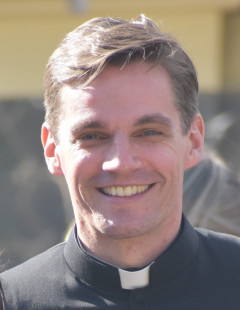
On 19 March at 10 am, Bishop Dr Bertram Meier of Augsburg will inaugurate the new Rector at Campo Santo Teutonico. The new rector is the former curate of the Anima, Konrad Bestle, priest of the Diocese of Augsburg. He is the ninth rector since the foundation of the Priests' College in 1876, after Anton de Waal, Emmerich David, Hermann Maria Stoeckle, August Schuchert, Emil Gugumus, Bernhard Hanssler, Erwin Gatz and Hans-Peter Fischer.

On the occasion of the seventh centenary of Dante Alighieri's death (1321-2021), an online exhibition is being organised; it features manuscripts, printed books, engravings and medals preserved at the Library.n.